
The resale economy is no longer a niche corner of e-commerce…
Recent research highlighted by KPMG found that resale platforms such as Vinted and eBay are now the primary shopping destination for 10% of UK consumers purchasing non-grocery goods, rising to 15% among 18–24-year-olds. The same research found that one in three consumers sold at least one item through a resale platform during the year.
For many people, platforms such as Vinted started as a way to clear out unwanted clothes. Today, however, resale has become a major retail sector in its own right.
In fact, Vinted has grown so significantly that it recently became the largest clothing retailer in France by sales volume, overtaking many traditional fashion retailers and online marketplaces.
As accountants working with e-commerce businesses and online sellers, we see first-hand how many successful businesses begin with a few listings on Vinted before growing into something much bigger.
From Decluttering to Running a Business
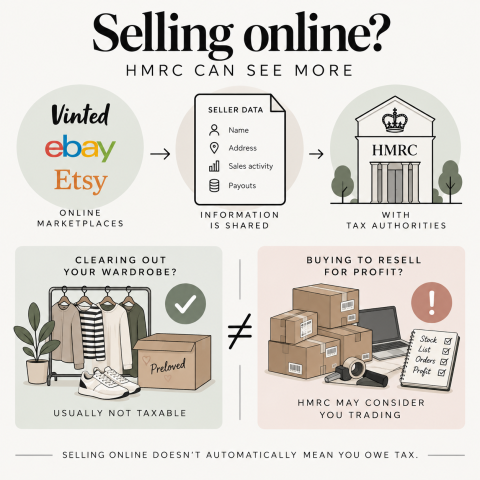
Many Vinted users are simply selling unwanted personal possessions. If you're clearing out your wardrobe and selling clothes you no longer wear, your tax position is often very different from someone who is actively sourcing stock with the intention of making a profit.
However, the line between casual selling and running a business is not always as clear as sellers think.
Common questions we hear include:
- Do I need to pay tax on Vinted sales?
- How much can I sell on Vinted before paying tax?
- Does HMRC receive information from Vinted?
- Do I need to register as self-employed?
- When does selling on Vinted become a business?
The answer depends on the nature of your activity rather than simply the amount you sell.
Contact MWA Accounting
We're flexible let us know what works best for you...
HMRC and Online Marketplace Sellers
HMRC has increased its visibility over online marketplace activity in recent years. Under international reporting rules, online marketplaces such as Vinted, eBay, Etsy and other platforms are required to share information about sellers with HMRC. This does not mean everyone selling on Vinted or that is reported to HMRC automatically owes tax.
However, it does mean that individuals operating a genuine resale business should ensure their tax affairs are up to date and accurately reported. If you're buying products specifically to resell, regularly sourcing inventory, or operating with the intention of generating profit, HMRC may regard your activities as trading.
The Rise of Professional Resellers
One of the biggest misconceptions about Vinted is that it is purely a platform for casual sellers.
Today, Vinted operates Vinted Pro, allowing professional traders to sell through dedicated business accounts. Alongside individual sellers, the platform is increasingly being used by professional resellers who source stock from:
- Charity shops
- Vintage wholesalers
- Clearance and liquidation stock
- Customer trade-in programmes
- Surplus retail inventory
Many of these businesses sell across multiple channels, including Vinted, eBay, Etsy, Shopify and Amazon. What starts as a side hustle can quickly become a growing e-commerce business.

The Growth of Luxury Resale
Vinted and other resale marketplaces are no longer used exclusively by individuals selling unwanted clothes.
Alongside casual sellers and vintage resellers, a growing number of businesses specialise in authenticated luxury goods. From Chanel handbags and Rolex watches to Louis Vuitton luggage and designer fashion, the luxury resale market has become a significant sector in its own right.
These businesses often face additional challenges around authentication, stock valuation, VAT and profitability reporting. In many cases, they operate more like traditional retailers than marketplace sellers and have complex accounting and financial reporting needs.
Accounting Challenges for Resale Businesses
As turnover increases, so do the accounting and tax responsibilities.
Growing resellers often face challenges around:
- Self-Assessment tax returns
- Bookkeeping for online sellers
- Tracking profitability across multiple marketplaces
- Stock and inventory management
- VAT registration requirements
- Limited company formation
- Cash flow forecasting and business planning
Understanding your numbers becomes increasingly important as your business grows. Without accurate bookkeeping and reporting, it can be difficult to understand which products are profitable, how marketplace fees impact margins, or whether your business is meeting its tax obligations.
Case Studies
…after what started as buying vintage clothing bales at weekends gradually developed into a thriving online business. Within 18 months, annual turnover had grown to around £75,000 across Vinted, eBay and Depop.
Like many growing marketplace sellers, the focus had been on sourcing stock and making sales rather than the administration behind the business. Bookkeeping was incomplete, no Self Assessment returns had been submitted, and there was no clear picture of whether the business was actually profitable once marketplace fees, postage costs and inventory purchases were taken into account.
Because stock was being purchased specifically with the intention of reselling it for profit, the activity amounted to trading rather than simply selling unwanted personal possessions.
We helped the business to:
· Register correctly with HMRC
· Bring tax filings up to date and minimise penalties where possible
· Introduce bookkeeping processes to accurately record stock purchases, sales and marketplace fees
· Calculate true profitability, including the treatment of closing stock at the year end
· Review the VAT position as turnover increased
· Plan ahead for future growth, including whether operating through a limited company might become more tax efficient
Today, the owner has organised financial records, understands the profitability of each sales channel and can plan for future tax liabilities with confidence rather than facing unexpected bills.
What begins as a side hustle can quickly become a genuine ecommerce business. Having the right systems in place from the outset makes growth much easier to manage.
Marketplace platforms such as Vinted are also becoming increasingly popular with content creators and influencers. One creator who came to us had built a substantial audience across Instagram and TikTok and regularly purchased clothing for brand collaborations, photoshoots and video content. As their business grew, they wanted to ensure they were keeping accurate records and understanding the tax treatment of their expenditure.
Rather than allowing items to accumulate indefinitely, clothing that had served its commercial purpose was regularly sold through Vinted. This created a clear audit trail showing both the original purchase and the subsequent disposal, while also helping to recover some of the costs associated with producing content.
The tax treatment of clothing is a complex area and depends on the specific facts and circumstances of each case. Whether expenditure is deductible will depend on how the items are used and the evidence available to support their business purpose.
For creators operating commercially, maintaining good records, separating business and personal expenditure, and seeking professional advice are all essential. As the creator economy continues to grow, platforms such as Vinted are becoming a natural extension of many online businesses rather than simply somewhere to declutter unwanted clothes.
The luxury resale market provides another example of how online selling has evolved.
One business began by buying and selling a small number of designer handbags before expanding into authenticated luxury goods, including watches, jewellery and sought-after fashion pieces. As turnover increased, so did the complexity of the business. Authentication costs, stock valuation, insurance requirements, marketplace commissions and VAT considerations all became important factors in understanding profitability.
Many luxury resellers also sell internationally, creating additional challenges around record-keeping, cross-border transactions and compliance. For businesses operating in this sector, accurate accounting is about far more than filing tax returns. It becomes a key part of managing inventory, cash flow and long-term growth.
The luxury resale market may look very different from a typical Vinted seller, but the underlying challenge is often the same: turning commercial success into a sustainable and compliant business.
Resale Is Becoming Mainstream
The growth of Vinted demonstrates a wider shift in consumer behaviour. Second-hand shopping is no longer an alternative to retail; for many consumers, it has become retail.
As resale marketplaces continue to grow, we expect to see more sellers transition from occasional trading to fully-fledged e-commerce businesses.
Whether you're selling vintage clothing, second-hand fashion, collectables, or refurbished goods, it's important to understand your tax obligations and build solid financial systems from the outset.

Need Advice on Tax for Vinted, eBay or E-commerce Selling?
At MWA Accounting, we work with online sellers, e-commerce businesses and marketplace traders across a range of platforms, including Vinted, eBay, Etsy, Shopify and Amazon.
Whether you're unsure about your tax position, need help with bookkeeping, or are considering turning your side hustle into a limited company, our team can help you stay compliant and support your growth.
Get in touch to discuss your business and how we can help by booking a no obligation discovery call.
Disclaimer: This article is for general information only and reflects our understanding of the law and HMRC practice at the date of publication. It should not be relied upon as advice. Professional advice should be sought before taking or refraining from any action.